Winding Tools
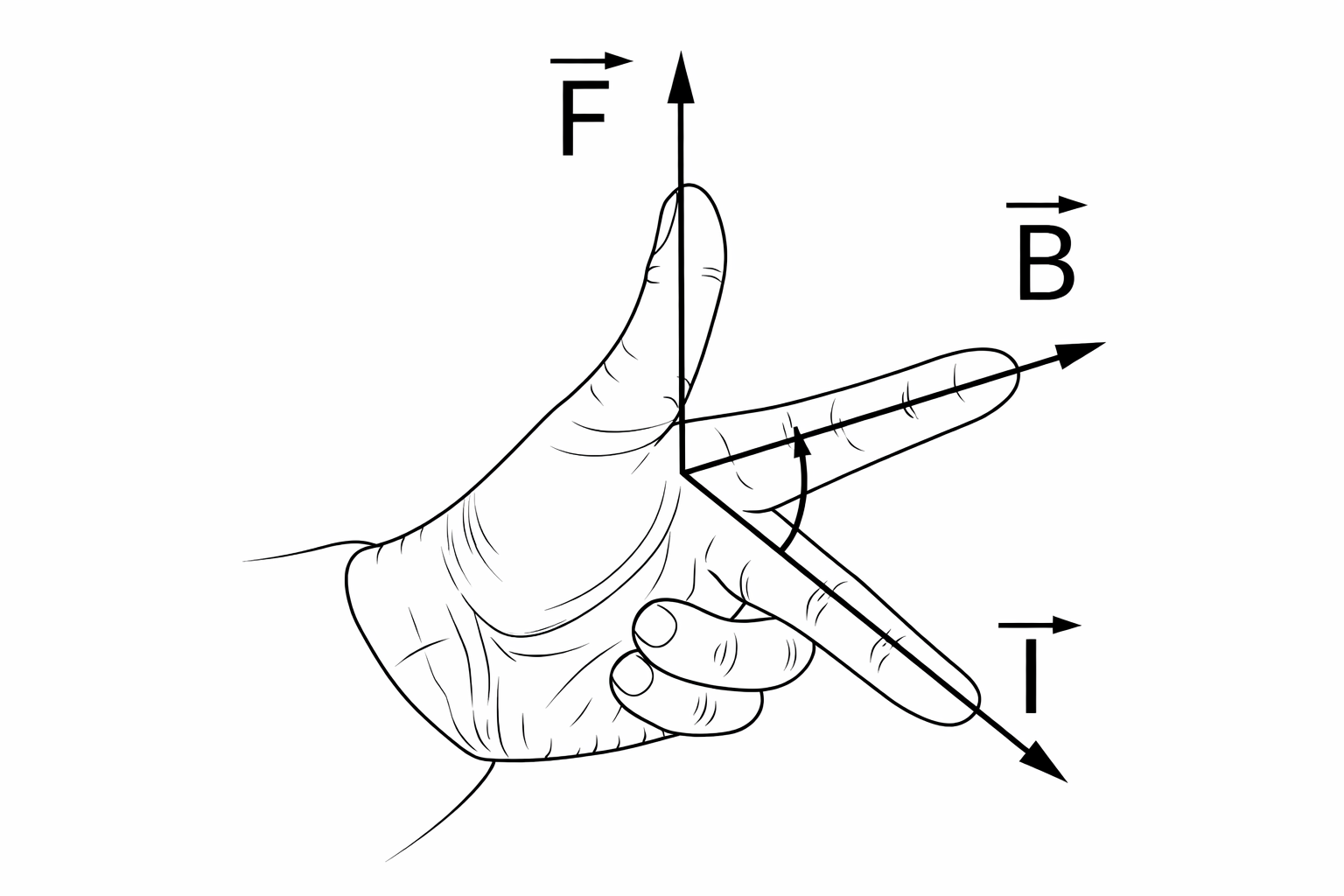
This rule is used to determine the direction (and magnitude) of the motion of a wire, generally a conductor carrying an electric current while placed in a magnetic field. It was described by the Englishman John A. Fleming and is used mainly to analyse the behaviour of electric motors, both DC and AC.
Consider a conductor placed in a magnetic field, as in figure 2.1. When no current flows through the conductor, the magnetic field is perpendicular and remains unchanged. When a current flows (figure 2.2), a magnetic field is created around the conductor following the Corkscrew rule; in this case, since the current flows towards us, the field turns anticlockwise and adds to the existing one. This distorts the lines of the original field, as shown in figure 2.3: the lines on the left are weakened and those on the right are strengthened, pushing the conductor to the left.
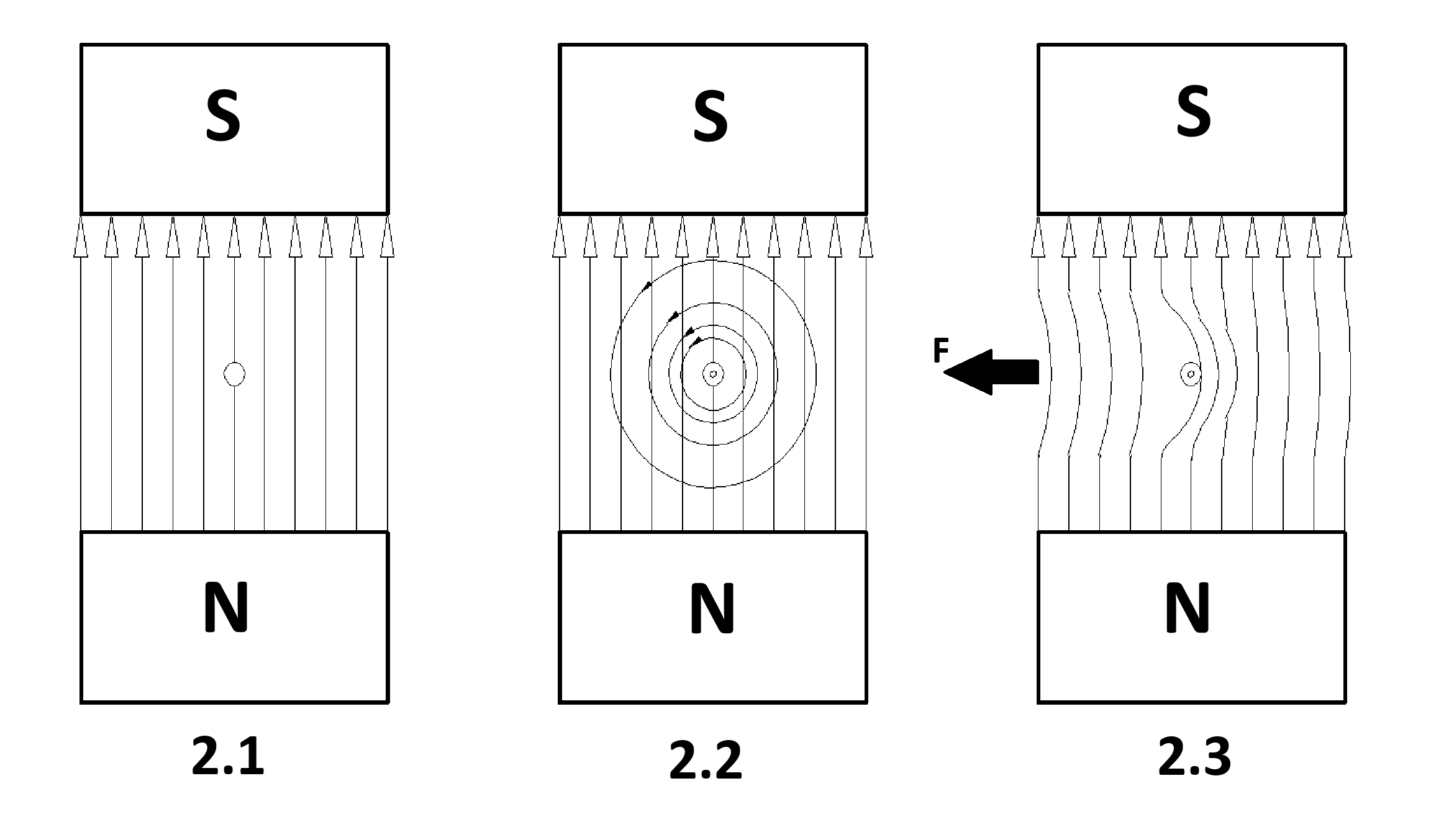
This motion is called the electrodynamic force, and it is the essence of every type of electric motor. The resulting force is:

 Español
 Français
 Português
 Deutsch
 Italiano
 Polski
 Türkçe