Winding Tools
The corkscrew rule is a method for finding the direction of the magnetic field created by a conductor, usually cylindrical, when an electric current flows through it. It is named after the corkscrew because it relates the forward movement of the corkscrew into the cork to the turn applied to it. In fact, this rule is a simplification of Fleming's right-hand rule.
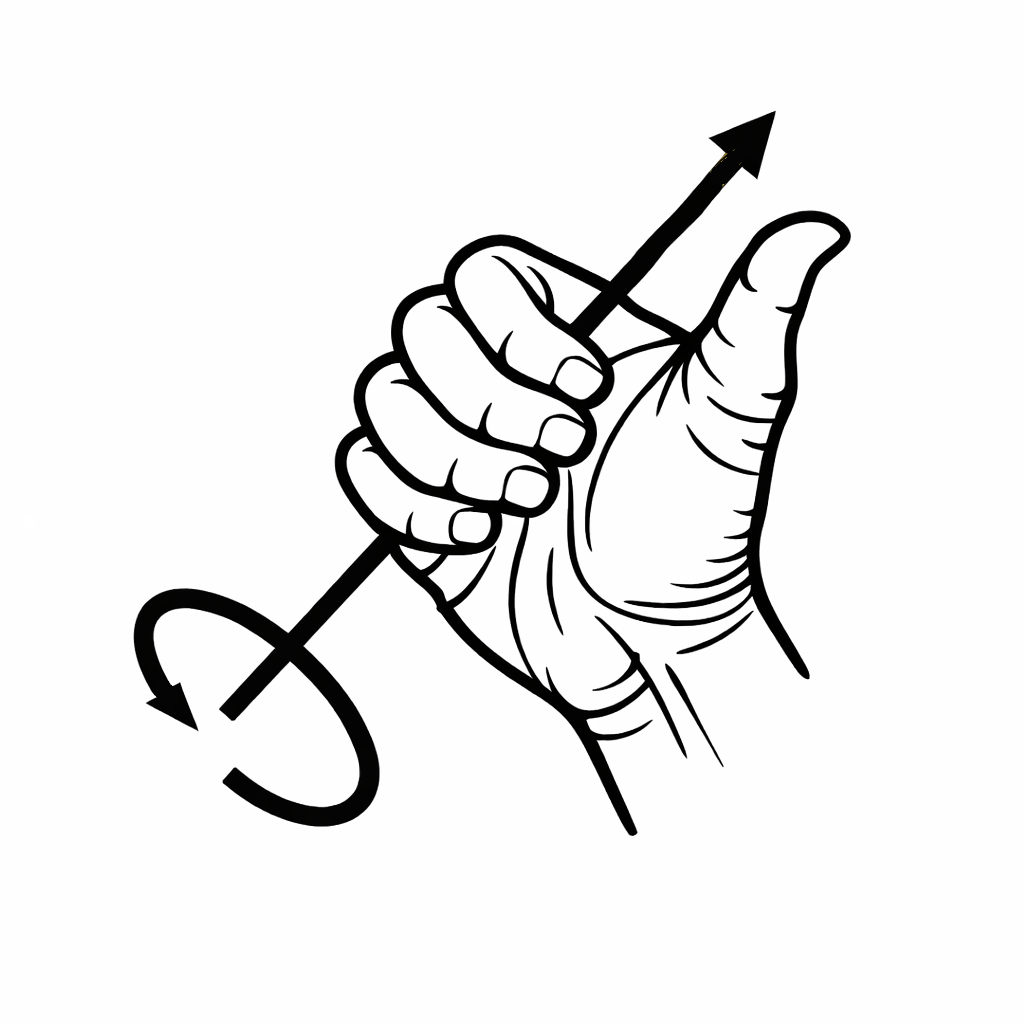
It works by "gripping" the conductor with your right hand with the thumb pointing in the direction of the current: the other fingers show the direction of the magnetic field created. The greater the current through the conductor, the stronger the magnetic field. If the current varies over time, so does the field. The magnetic field created obeys Ampère's law. If several conductors are close enough together, their magnetic fields add up or cancel out, depending on whether the currents flow in the same or in opposite directions.

 Español
 Français
 Português
 Deutsch
 Italiano
 Polski
 Türkçe