Winding Tools
This rule is, in a way, an extension of the Corkscrew rule and is used to find the direction and magnitude of the current that will flow through a conductor moving inside a magnetic field. It describes the behaviour of electrical generators, both DC and AC.
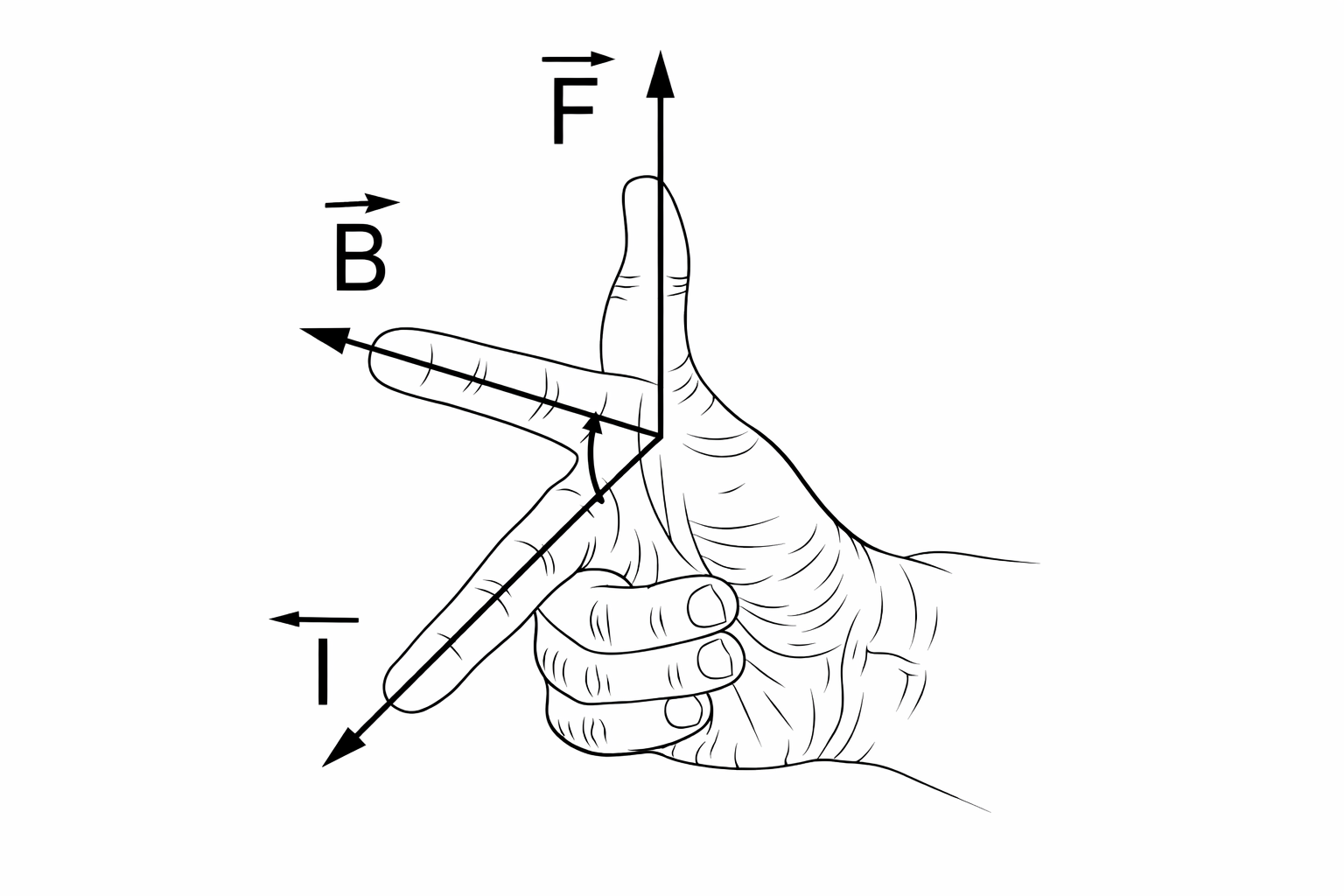
If a conductor moves within a magnetic field in a direction that cuts the lines of force, an electromotive force is induced in that conductor. This induction depends solely on the relative motion between the conductor and the magnetic field.
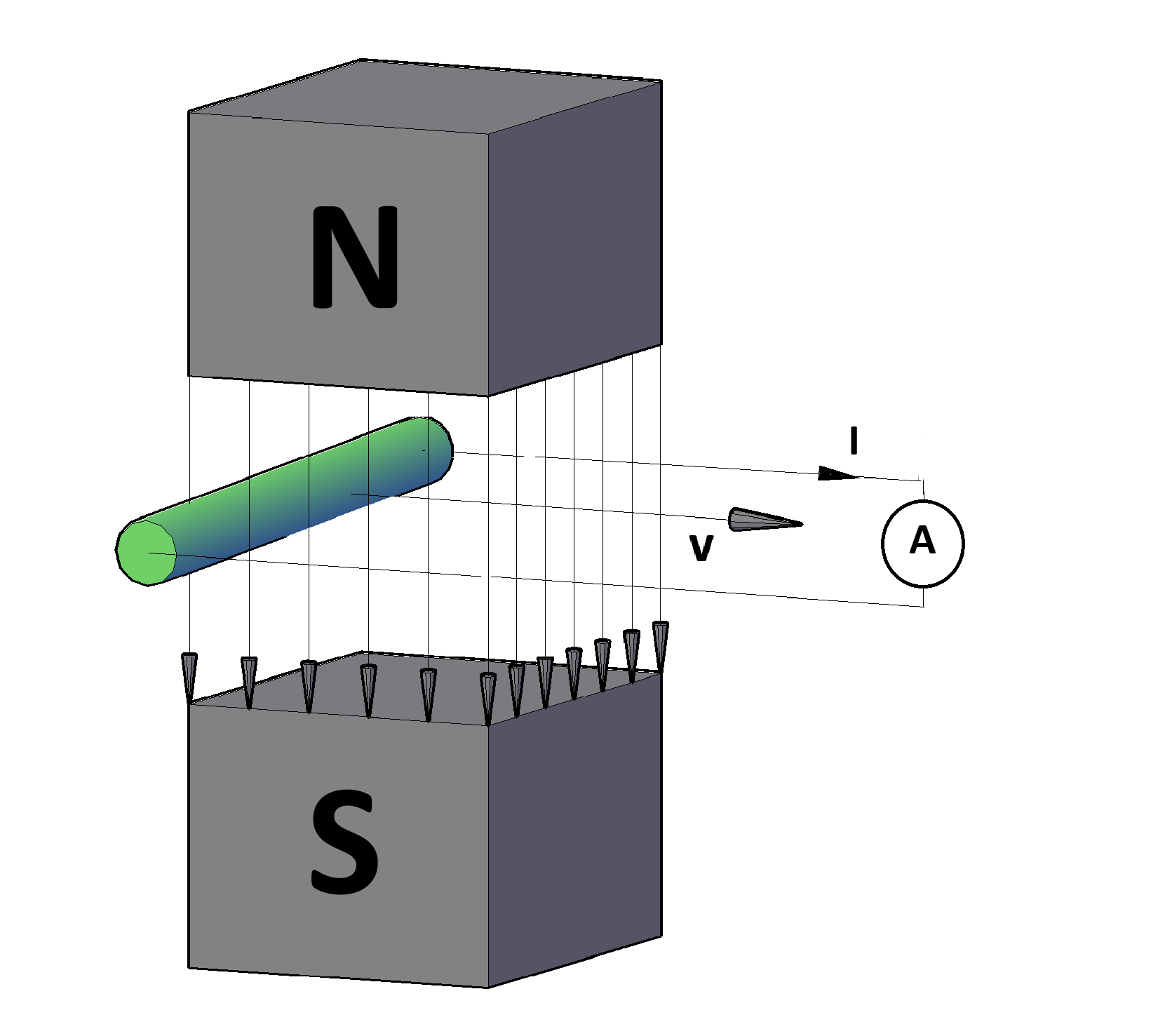
Bear in mind that when we talk about motion at a certain speed v, only the component of the velocity perpendicular to the magnetic field counts. In other words, if the conductor in the figure moves vertically no current at all is produced, and if it moves diagonally only the component normal to the field is taken into account.

 Español
 Français
 Português
 Deutsch
 Italiano
 Polski
 Türkçe